27 January 2020
Young diplomat Adam Kolomazník opens up in an interview about interesting simulations and seminars
Gentlemen are slowly dying out. Few men will help you off with your coat, let you go through a door first, or shake your hand in greeting. The young, gallant man featured in today's very inspiring interview belongs to that small, not-yet-extinct breed of gentlemen. We're talking about Adam Kolomazník from 4.B. Good day, Adam. To start, why did you choose
Gentlemen are slowly dying out. Few men will help you off with your coat, let you go through a door first, or shake your hand in greeting. The young, gallant man featured in today's very inspiring interview belongs to that small, not-yet-extinct breed of gentlemen. We're talking about Adam Kolomazník from 4.B.
Good day, Adam. To start, why did you choose our gymnázium specifically?
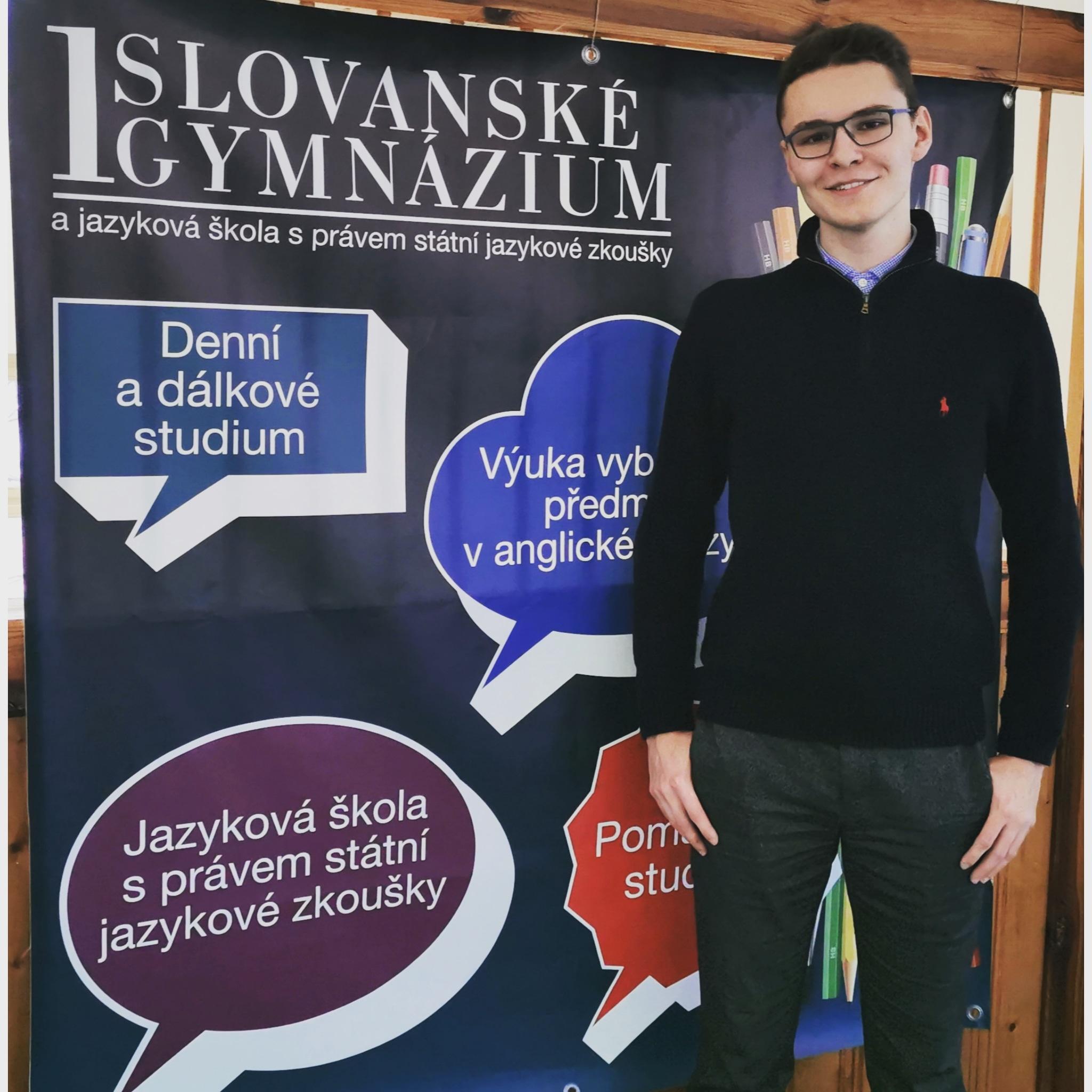
Good day, Ms. Uhrinová. Well, I spent my third year studying at CSA New Tech in Indiana, where I spent the whole year. After coming back, I was looking for a school where I could enroll for the fourth year, and 1. Slovanské gymnázium seemed like the best option given the quality of teaching and its strategic location.
How did you end up in Indiana specifically?
It actually started back in my first year of secondary school, when I went on language courses in England. I spent a month on an exchange stay in Spain, which I loved a lot, so I told myself I'd like to try it for longer — a whole year, say. And that's exactly what I managed to do, and I flew off to Indiana.
What all do you have to do to be able to go abroad to a university like that for a year?
It was an exchange stay. You create a profile through an agency, and it works so that a host family picks you directly. And a family in Indiana picked me.
What was the family you lived with for almost the whole year like?
I had a really active family. The father always had to be doing something, he took part in school events, so for example over spring break we went to New Orleans to volunteer — we built porches for people who had been hit by Hurricane Katrina in the past.
As for your time in the Czech Republic, what specific extracurricular activities do you take part in here?
I take part in various simulations — for example, I was just in Plzeň at the biggest one, the simulation of the European Parliament of Young Diplomats.
Can you tell us more about how the simulation in Plzeň went?
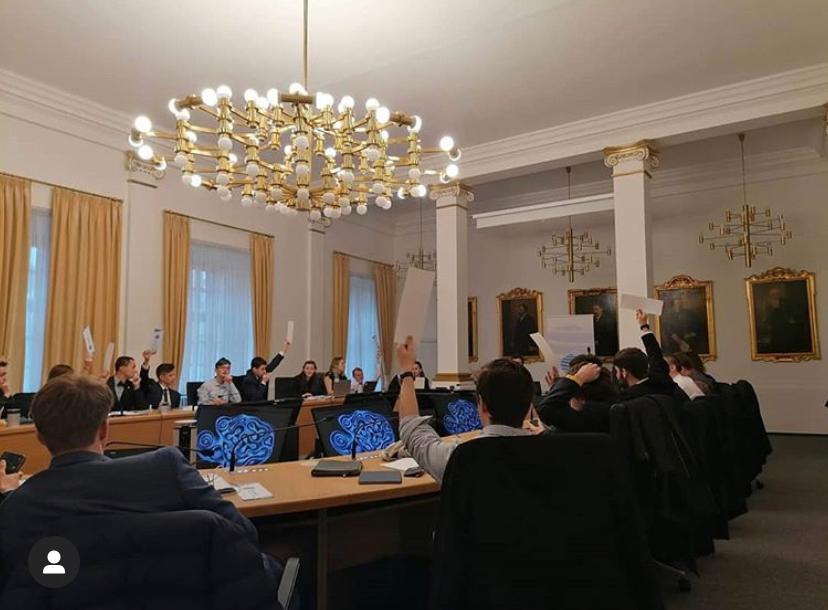
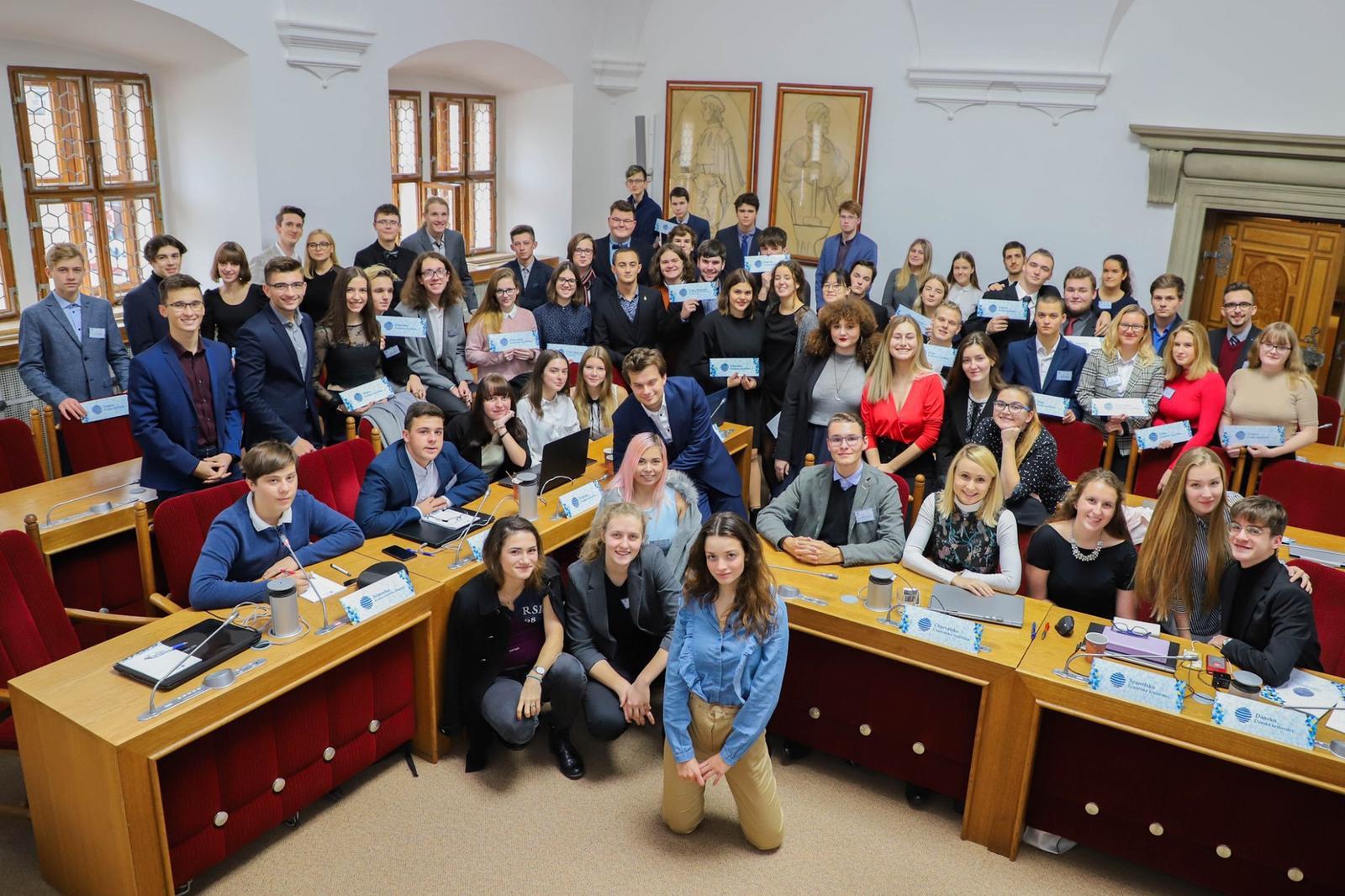
To start, I have to say it was the most elaborate project I've taken part in. It took place at the end of November. The project lasted a whole week, and we had the premises of Plzeň's town hall at our disposal. As is traditional, we were divided into political factions and committees. This time I was on the security committee, where among other things we dealt with the migration crisis, a common unified EU army, and further cooperation among European states within the PESCO project. It was great that there was plenty of time in the committees for lengthy speeches, so everyone who wanted to had the chance to practice their spoken delivery, gestures, and improvised responses. On the fourth day of negotiations, after long tension between Hungary and Slovakia, war broke out, which meant a huge crisis that had to be resolved. At the end of the simulation, the proposals passed by the committees were debated in the plenary, and a few of them even passed. After the plenary session came a lecture from MEP and former TOP 09 leader Jiří Pospíšil, and the announcement of the simulation's best participants, which made all of us who were chosen very happy.
What other simulations did you take part in this year?
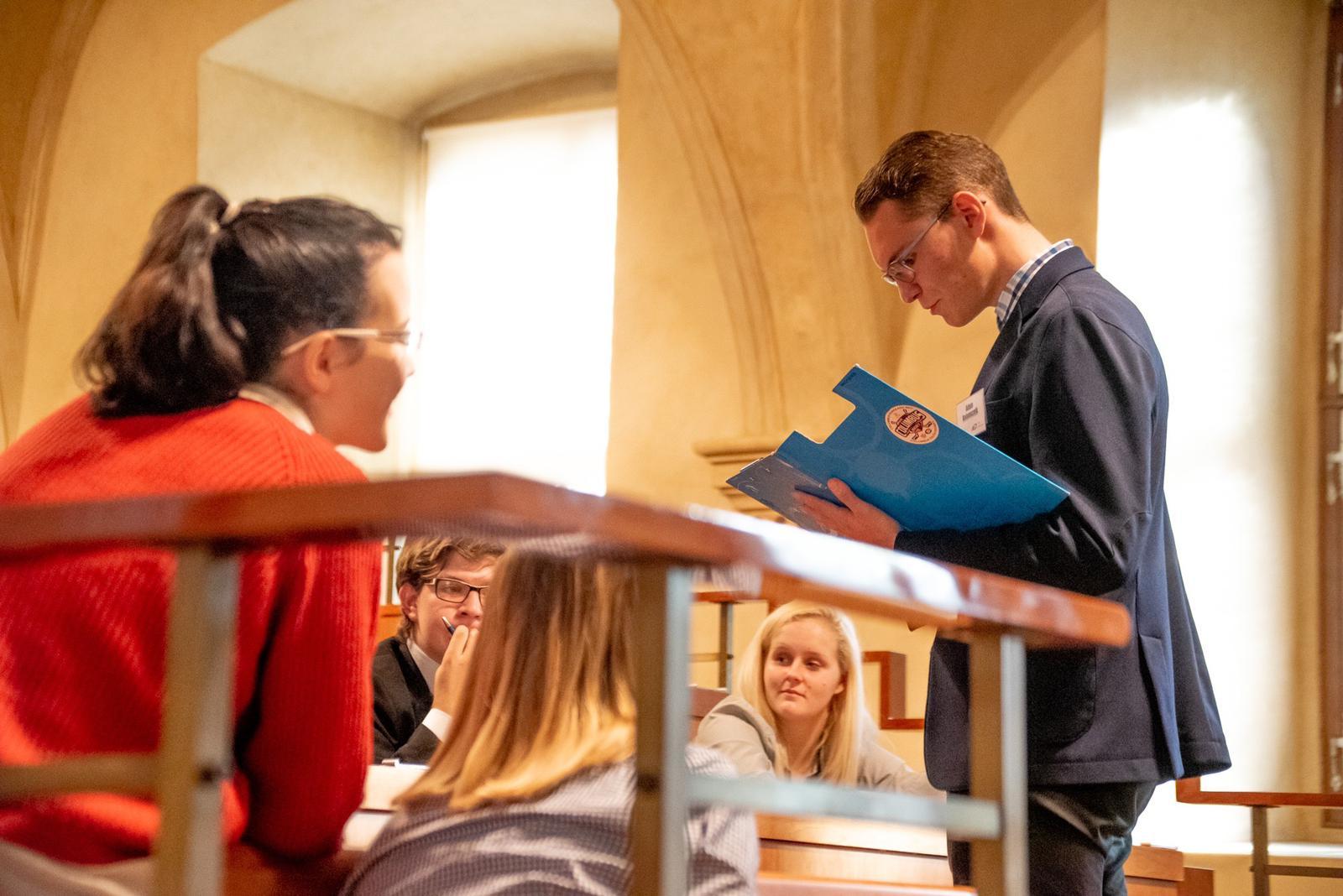
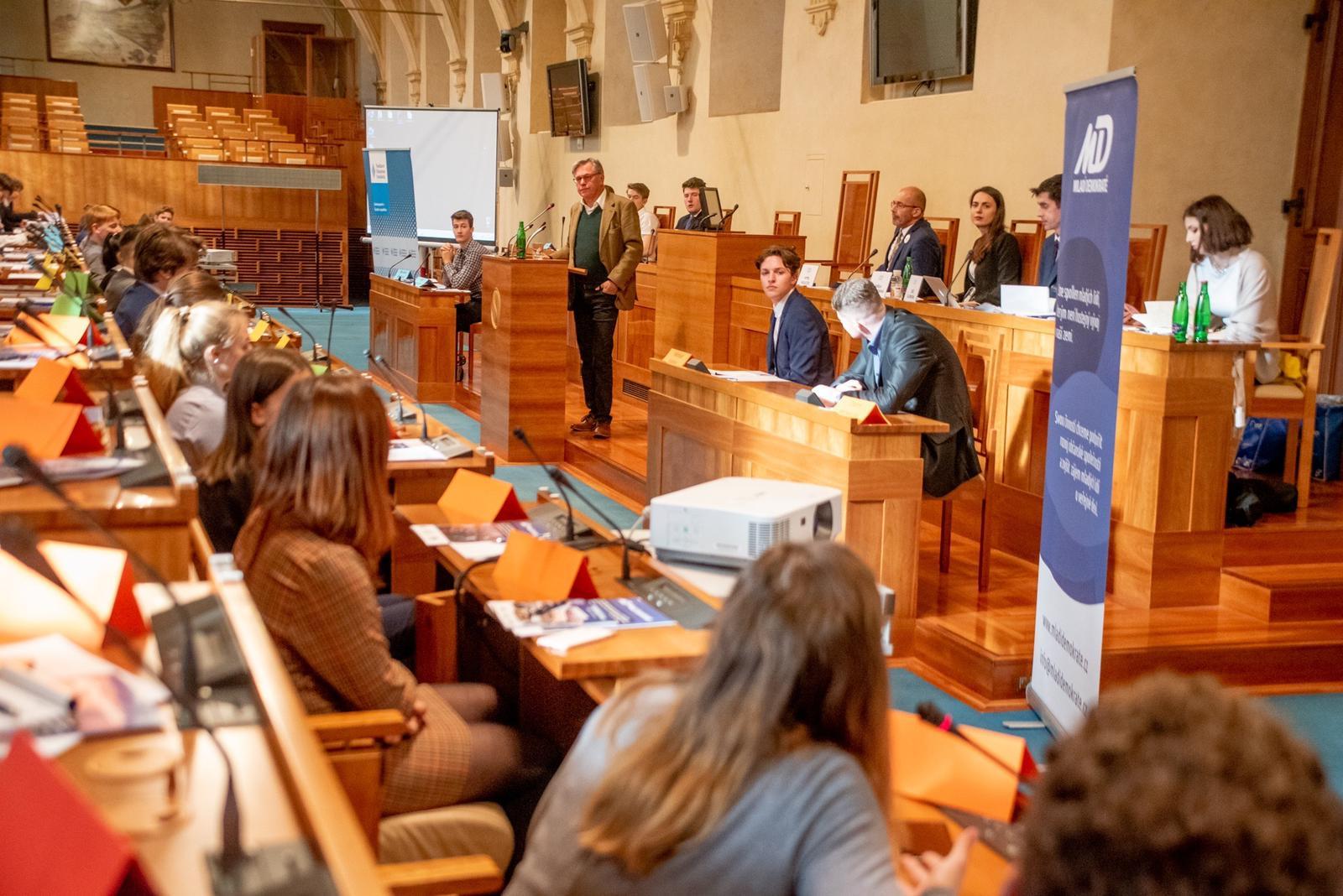
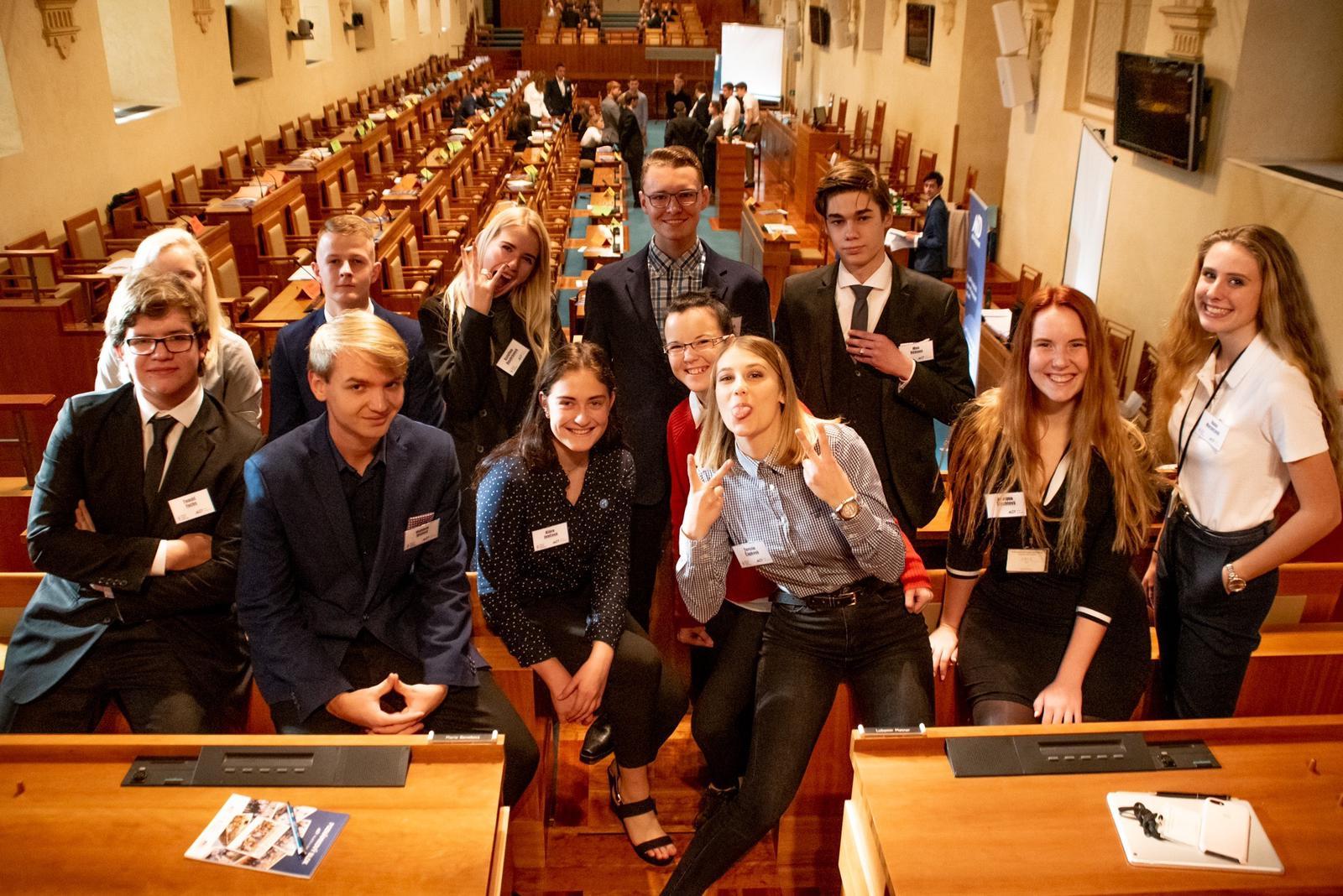
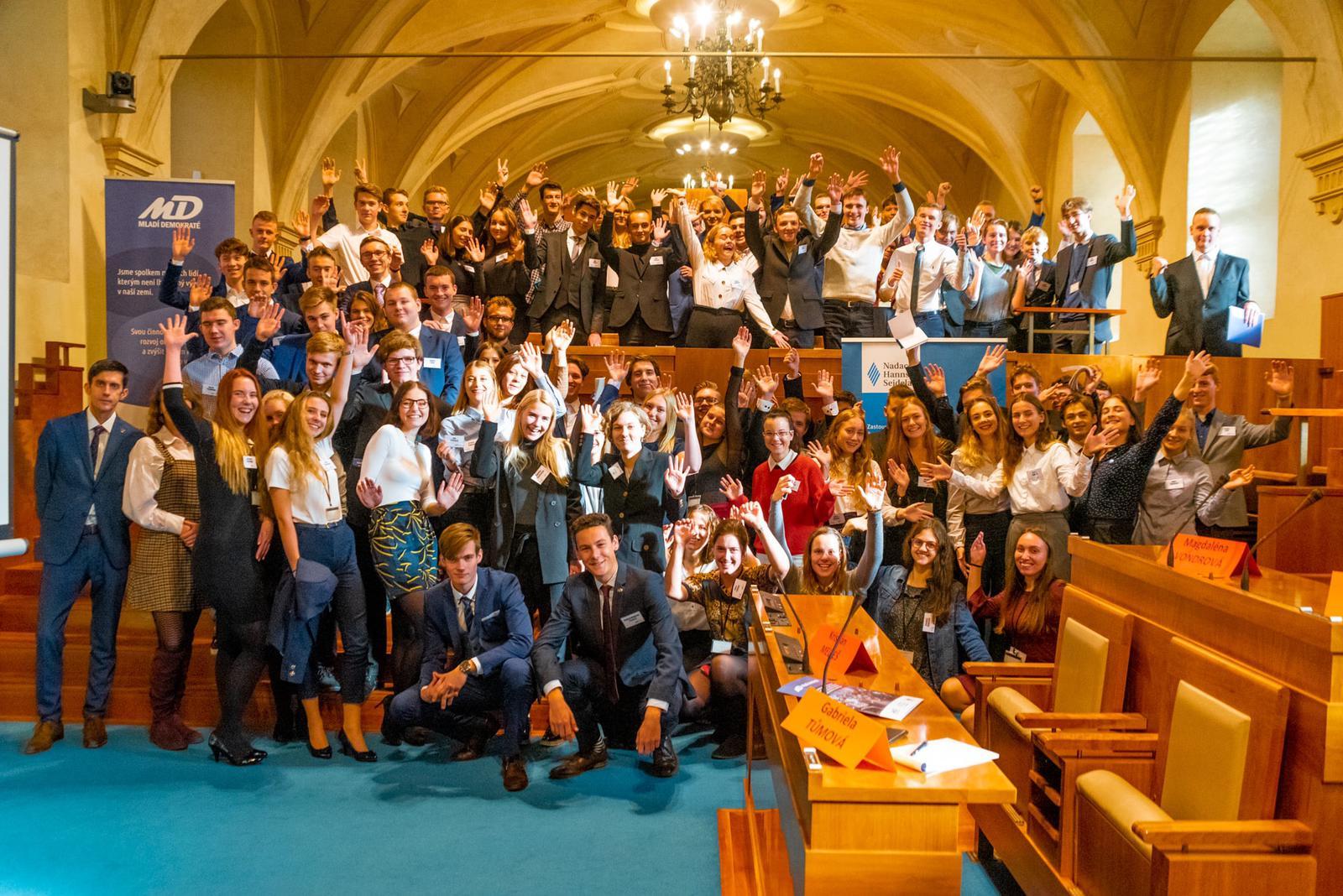
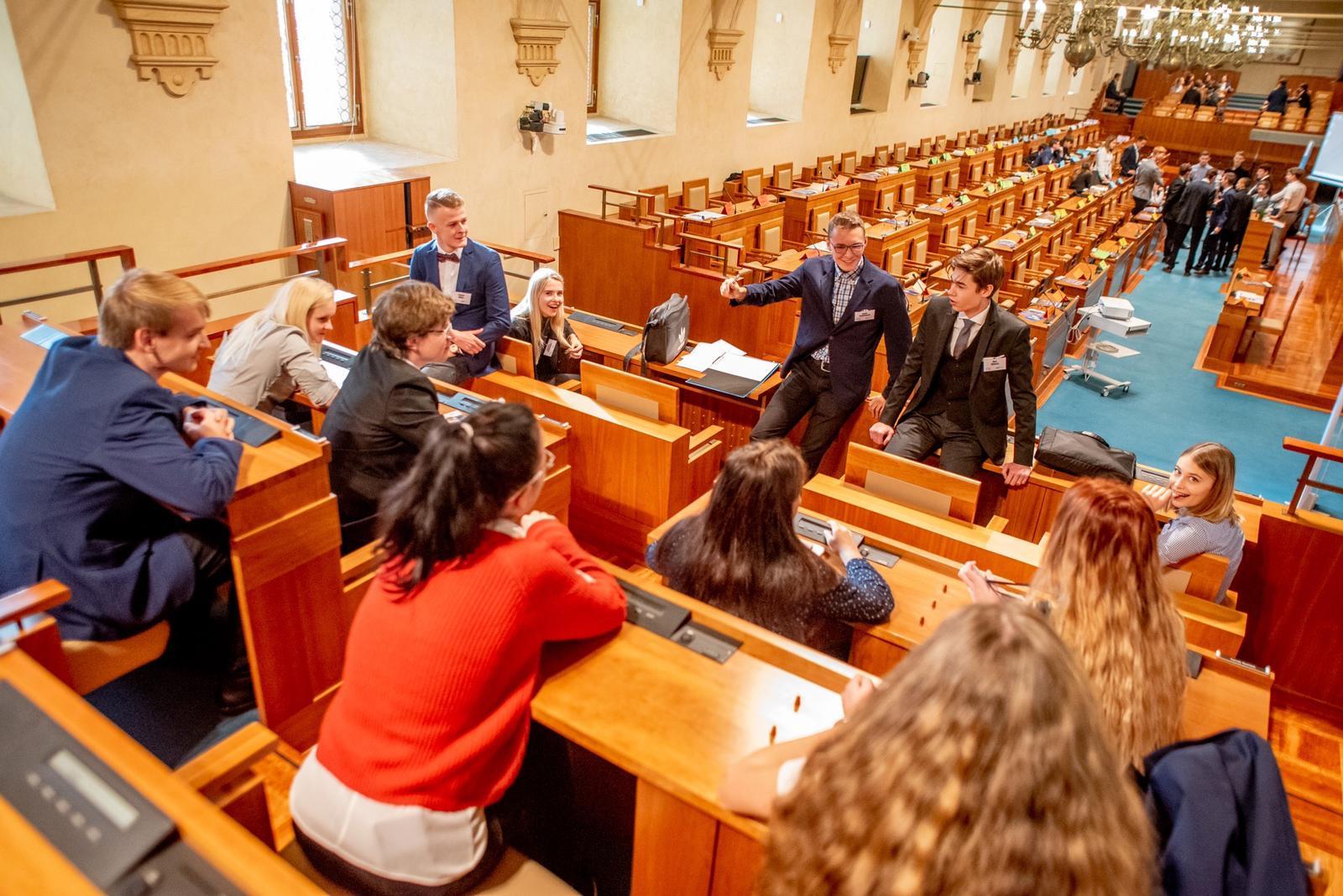
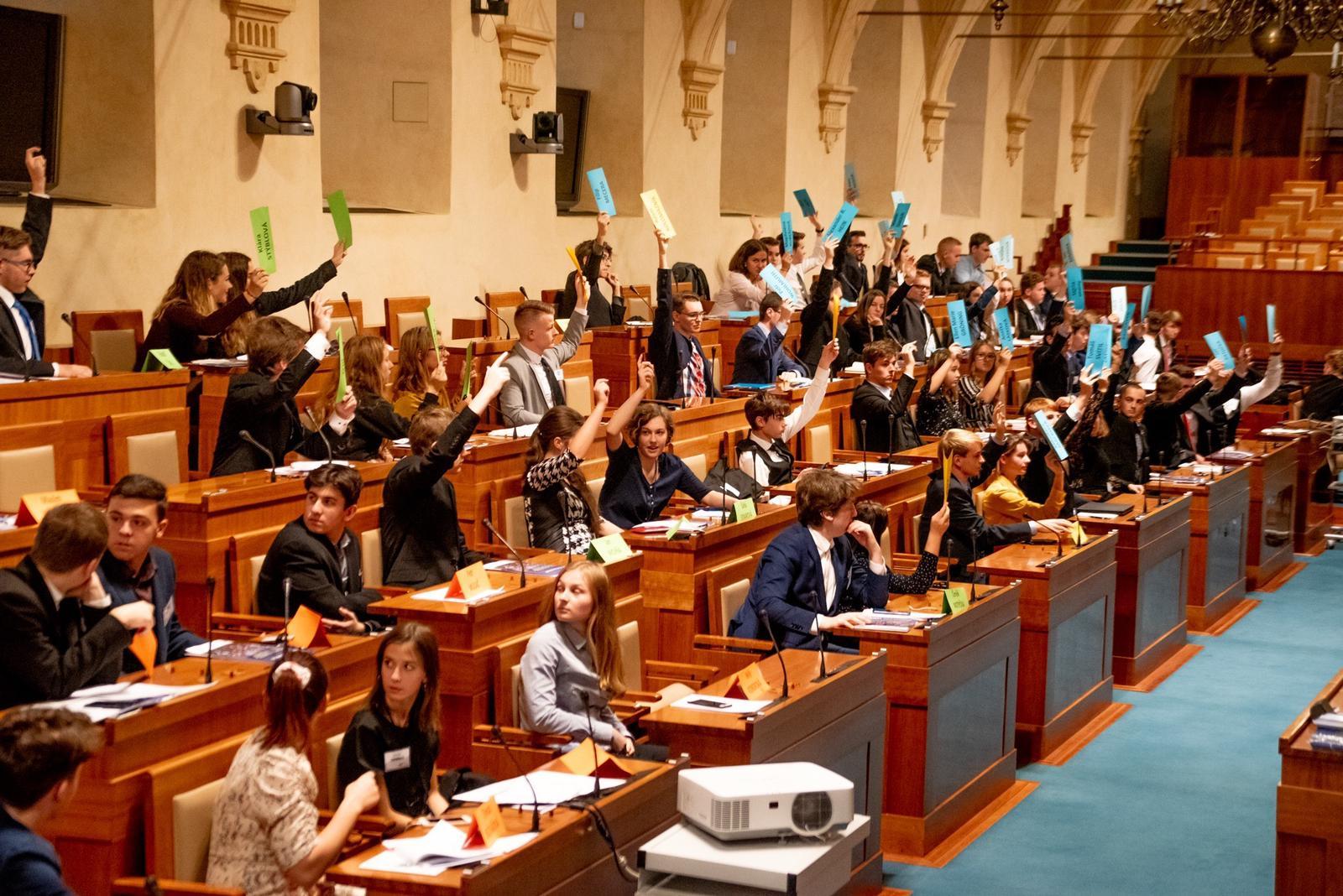
On 7 and 8 November 2019, the third edition of the European Parliament simulation in Prague was held in the negotiating hall of the Czech Senate. During the event, 85 students got to try out the work of an MEP on one of the committees — AFET (Committee on Foreign Affairs), ENVI (Committee on the Environment, Public Health and Food Safety), or JURI (Committee on Legal Affairs). It involved working in political groups just as in a real European Parliament. We spoke at a simulated plenary session and discussed matters with Libor Rouček (an MEP from 2004 to 2014) and Jan Pátek from the European Parliament Office in the Czech Republic.
This simulation only lasted two days, but thanks to great organization we managed to get a great deal done. I personally was on the ENVI committee, dealing with the environment. Every political faction had its representatives on every committee. At the start of the committee session, we were given a real draft regulation that was being discussed in Brussels, and we had to debate it in committee and submit additional proposals along with amendments. Then, once the proposal was voted on in committee, the harder part came. We needed to build alliances with the other factions so the proposal would pass in the plenary session. That was the most interesting part for me, since as chairman for my faction I had to handle an incredible number of things at once. I was getting information from the proceedings of all the committees; all at once, as a faction, we had to agree on which proposals we were willing to sacrifice and which ones to support instead, in order to effectively push through our faction's interests. On top of that, we had to prepare the speeches each of us was supposed to give when presenting a proposal, while at the same time organizing everything so it all ran smoothly.
In the end, unfortunately, our main proposal fell short by a single vote, which was unlucky, but even so, we all agreed that this simulation really was a success and a great benefit for everyone.
Adam, hats off to you — is there another simulation you'd like to say a few words about?
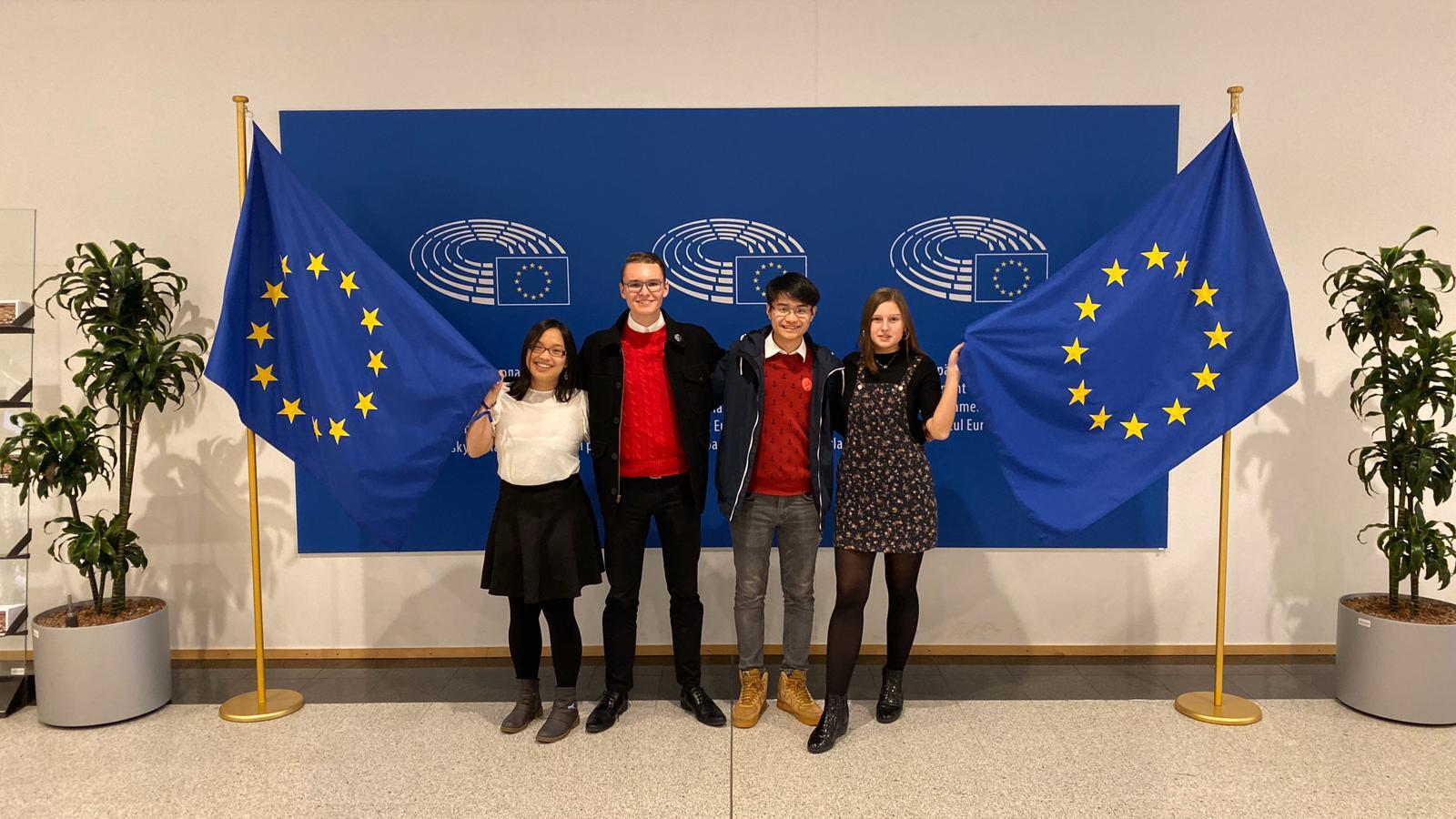
This year I also took part in “The Future of Europe” seminar in Brussels
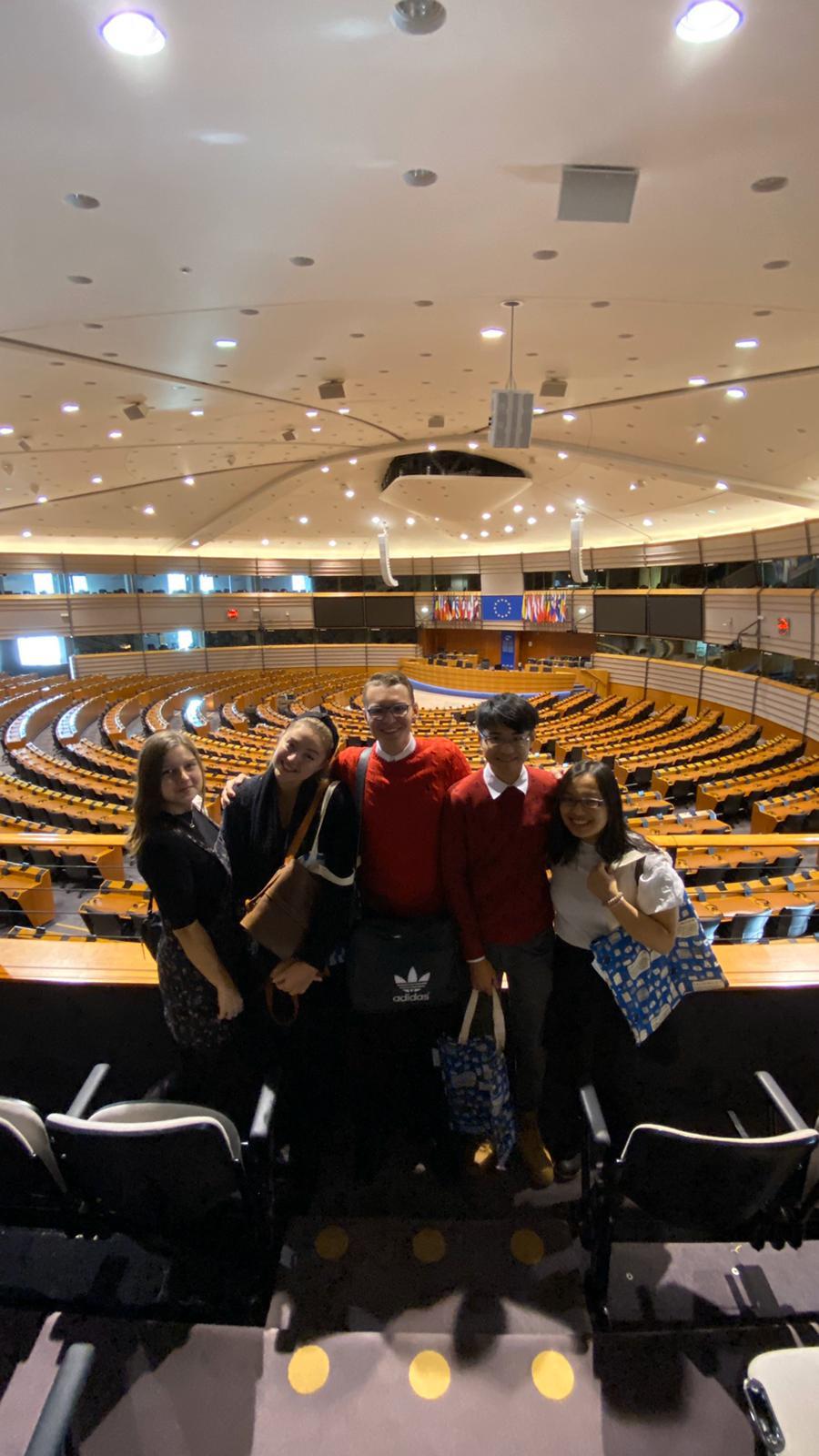
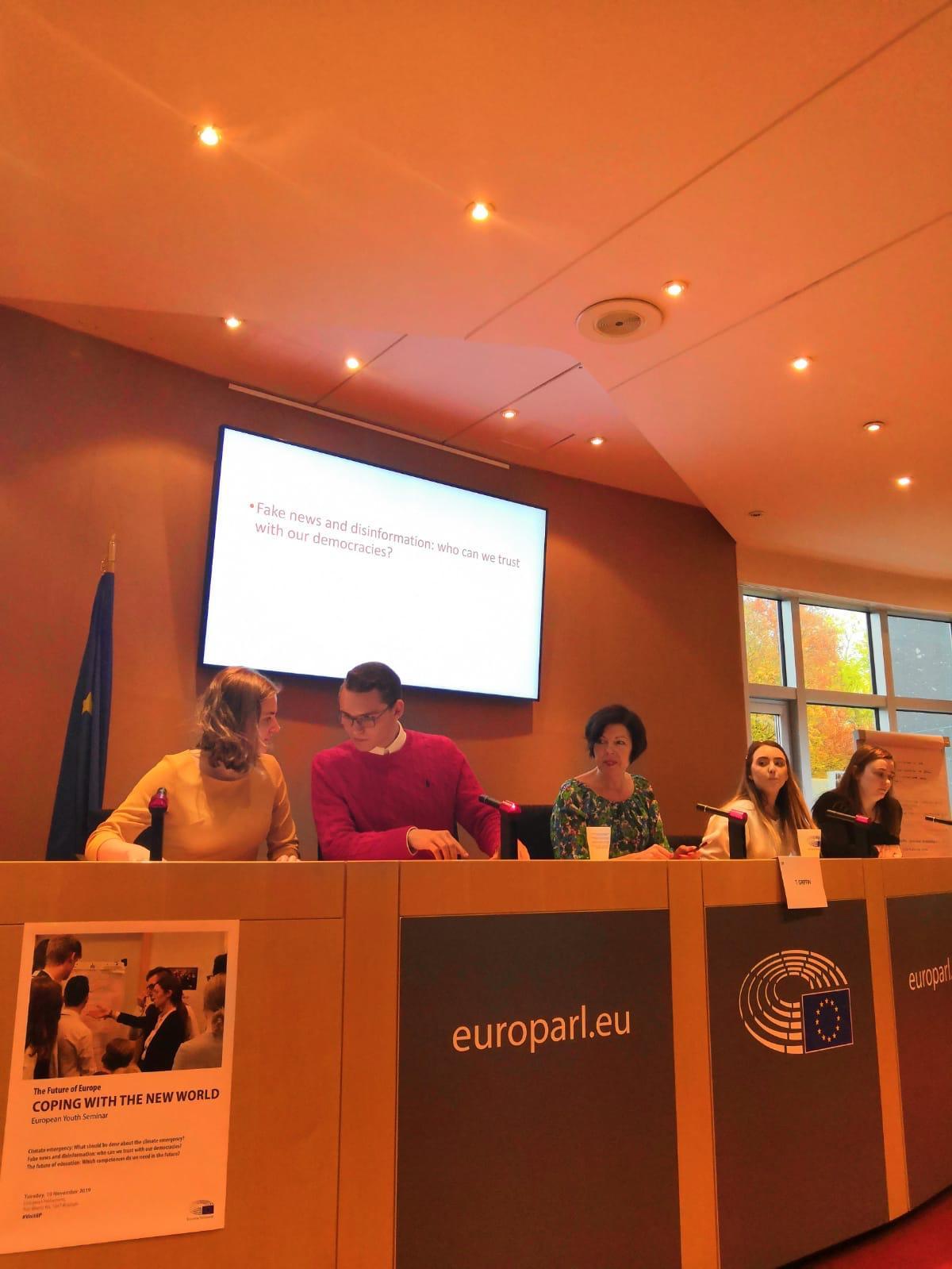
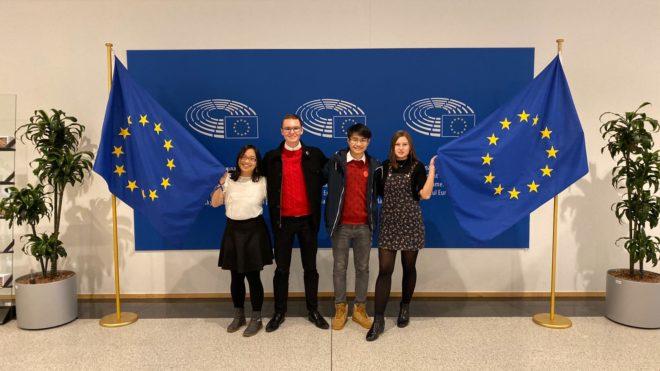
The Mladí Demokraté association organized a trip to this seminar, which was held at the European Parliament's seat in Brussels. Together with Spanish and Northern Irish participants, we were split into different committees. In mine, we dealt with recognizing disinformation and misinformation. First we had a discussion in committee, where an EU expert presented data and told us how to spot fake news. In the end, we were supposed to come up with solutions on various levels (personal, local, national, and EU level). My group worked on a solution at the personal level, which we then presented before a British MEP. The MEP commented positively on our solution, and there wasn't even any criticism. After the seminar ended, we went to the House of European History, which was a very nicely done museum.
You really do have a lot going on… Do you have time for other activities too?
Yes, there's plenty going on, but even so, I attend the international organization Toastmasters, which is a public-speaking club. Unfortunately, I've had to cut back on a lot of activities (the debate team, for example), since I'm now fully focused on preparing for my school-leaving exam.
And now for something completely different — what's your favorite food?
I wasn't expecting a question like that…
Thinking Thinking…
Potato pancake.
In what other ways do you represent our school?
I actually just made it to the regional round of the Economics Olympiad. Unfortunately, I couldn't take part in the English Language Olympiad, since I lived abroad for a year.
Adam, in what way do you think our gymnázium differs from others?
One definite difference is the international environment. We have around 7 nationalities in our class, and I really love picking up their traditions. For example, every morning I shake hands with students from Russia and Ukraine, something I've never experienced anywhere else, and it's a really nice custom.
Thank you so much for this inspiring interview.